
 All articles
Will AI Take Your Job? Wrong Question.

 July 30, 2026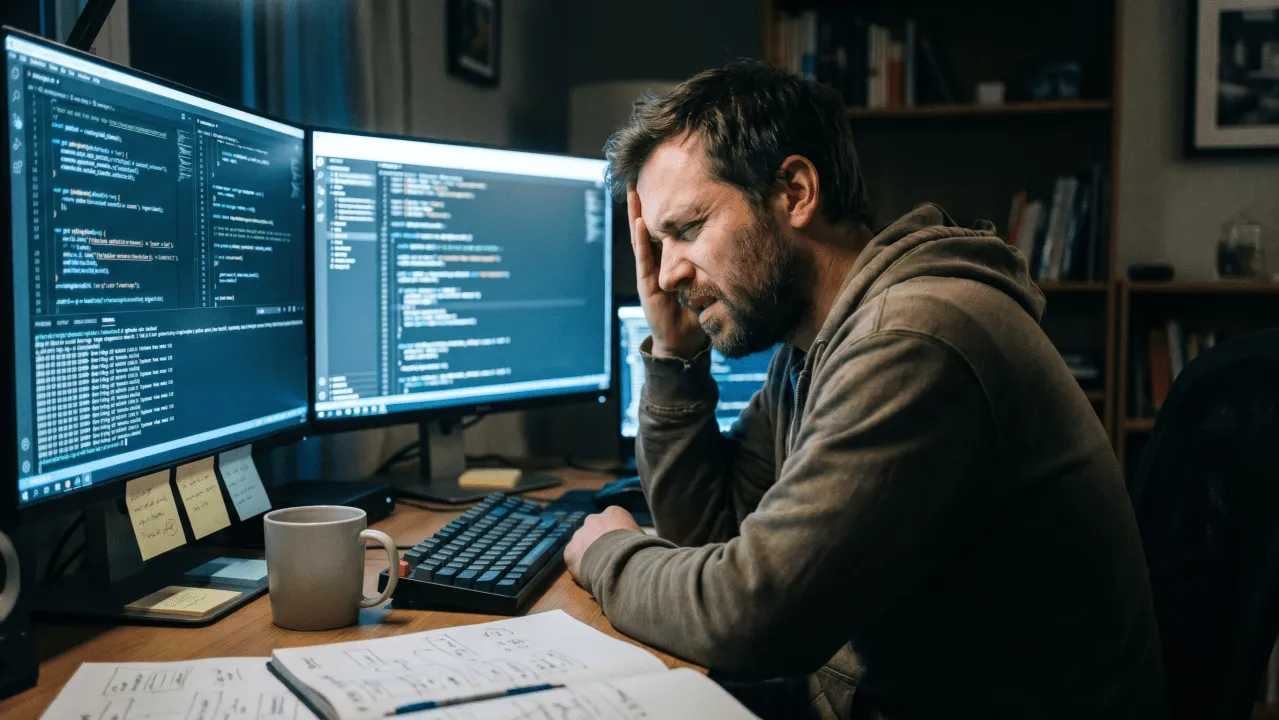
I get asked this at almost every keynote. The person asking usually looks slightly anxious, as if they already know the answer and are hoping I’ll talk them out of it.
The honest answer is: nobody knows. And anyone who tells you otherwise is selling something.
Predicting which jobs AI will displace is harder than most headlines suggest. The pace at which individual organisations actually adopt AI matters as much as the technology itself. A 2025 MIT study of 300 AI pilots in large organisations found that only 5 percent were producing measurable value. If adoption is slower than expected, displacement is slower too. Whether your industry is growing or shrinking matters. Whether your role involves physical presence or legal accountability matters. So does whether your decisions require ethical judgment or relational trust. The variables compound quickly, and the historical precedent is sobering: even after ATMs became widespread, the number of bank tellers in the United States increased between 1985 and 2002, because cheaper transactions led to more branches and more customers.
AI won’t leave your job untouched. It will move the constraint.
Here is what that means in practice. AI-powered code generation has shot up dramatically over the past two years. Releases of new software have not. The reason is that writing code was never the hardest part. Validating it in a real system, where interactions between components produce failures that no unit test predicted, was always the harder part. AI moved the constraint from writing to validating. The low-level task was absorbed. The high-level task became more demanding.
We see this pattern across industries. In law, document review was historically where junior lawyers spent years of billable hours. That work is now almost entirely automated at major firms. The lawyers remain, but they are doing strategic work earlier in their careers, making judgments that were previously reserved for senior partners. In logistics, route optimisation has replaced most human dispatchers. The people who remain manage the exceptions: situations too ambiguous or too new for the algorithm to resolve. In accounting, AI tools now extract and classify data from unstructured documents with 97 percent accuracy. The accountants interpret what the data means, not enter it.
In each case, the constraint moved up. The routine task was absorbed. The judgment task expanded.
This sounds like progress. In some ways it is. The World Economic Forum projects that by 2030, AI will create 170 million new jobs while displacing 92 million, a net gain of 78 million. After ChatGPT launched, job postings requiring routine structured work fell 13 percent, while postings for analytical, technical, and creative work grew 20 percent.
AI and burnout: the side effect we are only beginning to measure
Think about what it actually means to supervise six or eight AI agents writing code in parallel. Each time one stalls, it surfaces a problem. Not a simple one. A complex architectural question, a systems interaction the agent couldn’t resolve, a decision that requires genuine technical judgment. These questions arrive continuously, without the natural breathing space that comes from doing lower-level work yourself. The programmer’s workload hasn’t decreased. It has intensified. And the cognitive demand at every moment is higher than it was before.
The research is catching up with what many people already feel. Deloitte’s 2025 Workforce Intelligence Report found that mental fatigue and cognitive strain have now surpassed workload volume as the leading predictors of burnout. A new term has entered the literature: “AI brain fry,” defined as mental fatigue caused by excessive interaction with and oversight of AI tools. A Berkeley study found that people using AI are working more than three hours extra per week on average, with focused, uninterrupted work sessions falling by 9 percent. Burnout in 2025 is at a seven-year high, with 71 percent of full-time employees reporting symptoms according to Upwork’s Research Institute.
AI was supposed to give us time back. Organisations have largely filled that time with more work.
This is not a technology problem. It is a design problem.
The organisations that come through this well will be the ones that treat AI adoption as a reason to redesign work, not just to speed it up. 93 percent of businesses already using AI say they are open to a four-day workweek, compared to 41 percent of businesses not using it. Companies that deliberately built shorter weeks into their AI adoption, rather than simply doing more with the time saved, saw sustained results: 67 percent of employees in those organisations reported lower burnout, and 41 percent said their mental health improved.
The model of five days of peak cognitive output was designed for a world of lower cognitive demand. Running multiple AI agents at capacity while making constant high-level decisions is not the same as writing reports and attending meetings. The energy cost is different. The recovery requirement is different.
In The Human Spark I write about the parallels between biological systems and human organisations. A cell asked to operate at maximum output without recovery time doesn’t become more productive. It degrades. The same principle applies to the people now working at the top of the cognitive stack, supervising systems that never tire, never pause, and never need time to think.
The answer is not to work less for its own sake. It is to work more sustainably, more intentionally, more humanly. AI is raising the bar on what work means. The people and organisations that adapt will do so not by working harder, but by understanding that the quality of human thinking is a resource that requires care.
That is not a management insight. It is a biological one.
Over to you.
Has your work intensified since AI arrived, rather than eased? And what do you think it would take, in your organisation, to redesign work around how humans actually think rather than around how machines perform?
Share in the comments. I read every one.
Christian Kromme writes The Human Spark – Beyond AI, a newsletter about what it means to be human in a world being reshaped by technology.