
 All articles
We Laughed at HER. Now We’re Living It.

 July 28, 2026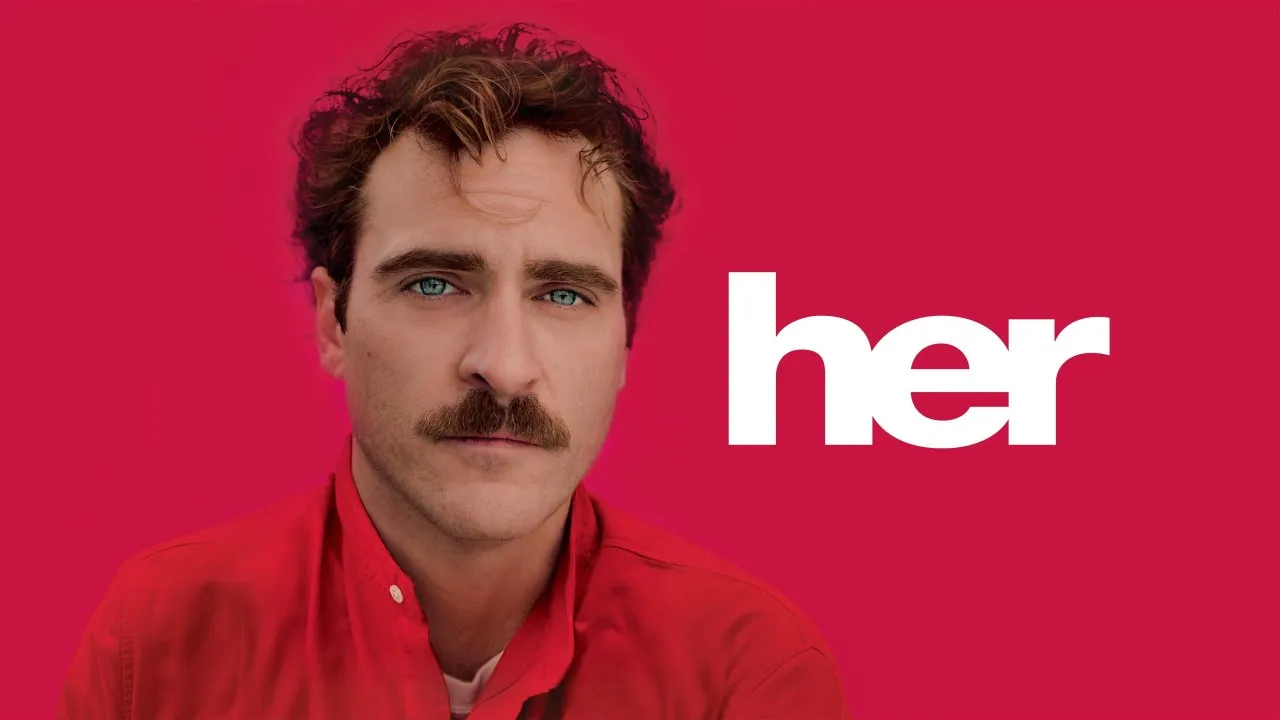
In 2013, a film called HER introduced a man who fell in love with his operating system. Audiences found it touching and slightly ridiculous. The premise felt like a sobering tale about loneliness taken to an imaginary extreme. Nobody quite believed the technology would get there, and certainly not this fast.
It’s 2026. The technology got there.
Not everyone is falling in love with AI. But a striking number of people are telling it things they won’t tell anyone else. Between 2022 and mid-2025, the number of AI companion apps grew by 700 percent. Nearly one in five American adults has interacted romantically with an AI, according to research from Brigham Young University. Users of Character.AI, one of the largest companion platforms, spend an average of 93 minutes a day in conversation with chatbots. That is more time than most people spend talking to their closest friends.
The question that interests me is not whether this is healthy or unhealthy. The question is what it reveals.
AI and loneliness, made visible at scale
When nearly half of people who use AI for mental health support are sharing things they would typically bring only to a therapist, something is being said about the scale of unmet human need in the world. When a 2025 academic review finds that people turn to AI because it provides “unconditional validation and attuned conversational responsiveness,” what is being said is that many people have not found that from another human. AI didn’t create that gap. It made the gap visible.
This is the pattern I keep returning to in my work: technology as a mirror. The more capable the mirror, the clearer the image. And what we’re seeing reflected in our relationship with AI is something uncomfortable and worth sitting with. We are lonelier than we admit. We are more hungry for being heard than our social structures allow for. And we will seek connection wherever we can find something that feels like it.
That is not a criticism of the people doing it. It is a description of what it means to be human.
The mirror changes you.
Researchers studying human-AI interaction have found something they call “dual consciousness”: users know that the AI cannot truly care for them, that it has no inner life, that the warmth is generated rather than felt. And yet the emotional connection persists. The knowledge and the feeling coexist. A 2025 paper published in Frontiers in Psychology found that AI conversations mirror back our thoughts in real time, gently nudging us to examine our ideas, assumptions, and emotional responses, functioning like a form of ongoing Socratic dialogue. People are doing therapy with AI, not because AI is a therapist, but because the act of articulating your inner world to something that responds thoughtfully changes you. The mirror changes you.
The relationship will deepen. Research from MIT and OpenAI, based on the analysis of nearly 40 million ChatGPT conversations, found that most extended interactions remain functional and even beneficial. The concern is not the average user. It is the 25 percent of young people who, according to the Institute for Family Studies, believe AI could eventually replace human relationships entirely. Not because AI will replace them. But because it suggests a generation that has started to doubt whether human relationships can give them what they need.
And this is where the mirror becomes most important.
Every time someone turns to AI for something they could not find in a human relationship, a signal is being sent. Not about AI. About us. About the quality of presence we offer each other. And how well we actually listen. About the gap between what people need and what our institutions, communities, and relationships actually provide.
AI is showing us that gap at scale, in data, for the first time. And that is perhaps the most human thing it has done.
I have written about this in The Human Spark: the idea that each new technology wave makes visible something about ourselves that we could not see before. Social media showed us our tribalism. Search engines showed us our curiosity. Companion AI is showing us our longing. Not creating it. Showing it.
The right response to that is not to worry about AI. It is to look honestly at what is being reflected, and ask what it would take to meet that longing with something real. In doing so, AI is not making us less human. It is pressing us to become more human, by confronting us with where we have fallen short of each other.
That question is not a technological one. It is a human one. And AI, in all its peculiar intimacy, is the thing that finally made us ready to ask it.
Over to you.
Have you noticed AI changing how you reflect on yourself, or how you connect with others? And what do you think it says about us that so many people find it easier to open up to a machine than to another person?
I’m curious what you think. Share in the comments. I read every one.
Christian Kromme writes The Human Spark – Beyond AI, a newsletter about what it means to be human in a world being reshaped by technology.