
 All articles
What Happens When We Give Away Our Humanity Before We Understand What It Is?

 August 4, 2026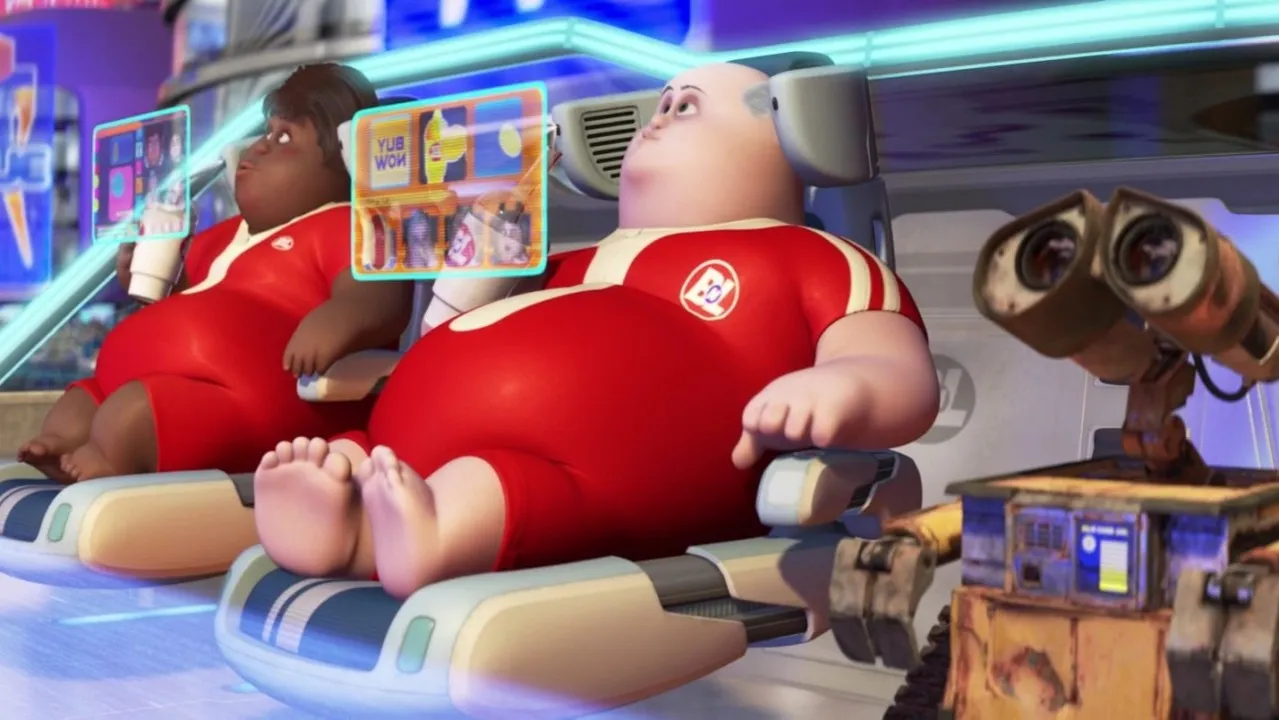
We are outsourcing capabilities we have never stopped to define. And that may be the most consequential thing happening right now.
Not the technology itself. Not the speed of adoption. The fact that we are handing things over before we know what they are worth.
What makes us human, and why we haven’t defined it
Think about what it feels like to not know something. The itch of an unanswered question. The low-grade discomfort of sitting with a problem you haven’t solved yet. We have built tools that make that feeling disappear within seconds. And we treat that disappearance as progress. But what if that discomfort was doing something? What if the not-knowing was the point?
Research in neuroscience is clear: the brain grows through challenge, not through comfort. When you hold an open question long enough, something happens underneath the impatience. You begin to connect it to other things you know. You absorb it. Then you turn it over. The mind builds itself around the difficulty. And when the answer arrives, not from a search result but from inside you, the satisfaction is not incidental. It is biological. It is the signal that growth occurred.
A whole generation is growing up without ever experiencing that signal.
Every question answered instantly. Every uncertainty resolved before it can settle. The feeling of not knowing, one of the most generative states a human mind can enter, is becoming unfamiliar. And we don’t yet understand what we’re losing because we haven’t stopped to ask what that state was giving us.
This is the deeper danger. Not that AI is powerful. Not that it is replacing jobs. But that we are trading away capabilities before we understand their value, the way someone might sell a painting for the price of the canvas because they’ve never seen what’s on it.
What makes us human isn’t a fixed list of traits. It has always been a moving edge: the capacity to sit with ambiguity, to find meaning in struggle, to become someone different through effort. Curiosity that doesn’t resolve neatly. Creativity that emerges from constraint. The ability to feel the weight of a question and let it change you before you answer it.
These are not soft skills. They are the biological machinery of human development.
Neuroscience professor Moshe Bar describes what keeps human beings healthy as progression. Not pleasure, not ease, but forward motion through challenge. The way a muscle grows stronger when it meets resistance, or a mind becomes more flexible when it moves through uncertainty without a guaranteed exit. When we engage in challenges that stretch our current capacity, physically, behaviourally, and mentally, mood improves, resilience deepens, health strengthens, and many of the processes we associate with ageing slow down.
Strip away the resistance, and the growth stops.
A muscle that never meets load doesn’t stay the same. It atrophies. A mind that never sits with uncertainty doesn’t stay curious. It gets comfortable with being fed. There is a difference between rest and stasis. We are building a world where stasis feels like efficiency.
The next public health crisis may not be burnout. It may be the slow hollowing out of the very faculties that make human life feel meaningful: the sense of having figured something out, of having earned an understanding, of being someone who wrestles with the world and comes out changed.
None of this is an argument to stop using the tools. The question is whether we know what we are doing when we use them. Whether we are making a deliberate choice or simply following the path of least friction. Because the path of least friction, followed long enough, doesn’t lead somewhere comfortable. It leads somewhere smaller.
To give away a capability deliberately, you first have to know what it is. You have to understand what it does for you, what it costs to maintain it, and what disappears when it’s gone. We are not there yet. We have not mapped the territory of our own humanity carefully enough to know what we can afford to outsource and what we cannot.
The urgency isn’t to slow down the technology. The urgency is to finally get serious about the question underneath it: what are we, exactly, and which parts of that are worth protecting?
Because once you’ve given something away and forgotten you ever had it, the loss is invisible. And invisible losses are the ones that never get recovered.
Over to you.
What do you think is at the core of what makes us human? And do you feel, in your own life or work, that any of that is being quietly eroded?
I’m genuinely curious what you’re noticing. Tell me in the comments.
Christian Kromme writes The Human Spark – Beyond AI, a newsletter about what it means to be human in a world being reshaped by technology.